Skip to content
a

valuable info blog...

a
Rep mgmt pic2

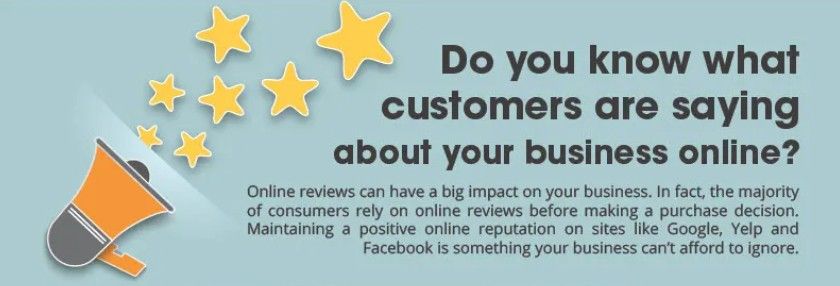
The Importance of Reputation Management Services

Your reputation isn’t built by word of mouth anymore—it’s built online.
Before customers ever call or visit, they check your reviews. What they see can win you the job—or send them to a competitor. That’s why reputation management is essential.


👉 Reputation management means monitoring reviews, responding to feedback, and building trust—especially on platforms like Google.

👉 Why it matters:
  • ⭐ First impressions happen before contact
  • 💰 Reviews directly impact buying decisions
  • 📍 Better reviews improve your Google ranking
  • 🛠️ Negative reviews can be managed (and even build trust)
  • 🏆 Most competitors aren’t doing it—giving you an edge

Most customers won’t leave reviews unless asked. A good system helps you generate more 5-star feedback, respond professionally, and stay in control of your brand.

👉 Bottom line:
Your reviews shape your reputation—and your reputation drives your revenue.
Learn More
a
Logo vintage no background3

10 Mistakes Small Business Websites Make (How to Fix Them)

Many small business websites fail—not because the business is bad, but because the website is.
Top mistakes (and quick fixes):

  • ❌ No clear message → Add a strong headline (what you do in 5 seconds)
  • ❌ Slow speed → Optimize images, hosting & code
  • ❌ Not mobile-friendly → Use responsive design
  • ❌ Weak call-to-action → Add “Get a Quote,” “Call Now,” etc.
  • ❌ Outdated design → Modernize your look
  • ❌ No SEO → Use proper keywords & structure
  • ❌ Too much text → Use bullet points & sections
  • ❌ No trust signals → Add reviews, testimonials, photos
  • ❌ Poor navigation → Keep it simple
  • ❌ No lead capture → Use forms & offers

Bottom line:
Your website should be your best salesperson—not your biggest weakness.

a
Logo vintage no background3

Do I Really Need a Website for My Business in 2026?

Short Answer: YES.

Even if you rely on social media, a website gives you:
  • Credibility
  • Control
  • Visibility on Google
  • Professional branding
  • Customer trust
 

Why Social Media Alone Isn’t Enough

You don’t own social platforms.
Accounts can be:
  • Suspended
  • Hacked
  • Restricted
  • Limited by algorithms
Your website is your digital property.


Benefits of Having a Website

1. Customers can find you on Google.

Search traffic is free & consistent.

2. You look more professional.

People trust businesses with websites more.

3. You can generate leads 24/7

even when you’re sleeping.

4. You control your brand.

No platform restrictions.
 

Who Needs a Website Most?

  • Contractors
  • Service businesses
  • Consultants
  • Local businesses
  • Startups
  • Entrepreneurs


Not having a website is like not having a phone number. It limits your growth.
a
Logo vintage no background3

How a Website Turns Visitors Into Paying Customers

Getting people to visit your website is only half the battle. The real goal?
👉 Turning those visitors into
paying customers.
A well-designed website isn’t just about looking good—it’s built to guide users through a process that leads to action. Let’s break down exactly how that works.


Step 1: Grab Attention Immediately

When someone lands on your website, you have just a few seconds to capture their attention. If your message isn’t clear, they’re gone. Your homepage should instantly answer:
  • What do you do?
  • Who do you help?
  • Why should they care?
Example of a strong headline: “Affordable Roofing Services in Atlanta You Can Trust”→ Clear. Direct. Effective.


Step 2: Build Trust Quickly

People don’t buy from businesses they don’t trust. Your website needs to reduce doubt as fast as possible. You can do this with:
  • Customer testimonials
  • Star ratings
  • Before-and-after photos
  • Real project examples
The more proof you show, the more confident visitors feel.


Step 3: Guide the User Experience

A good website doesn’t leave users guessing. It guides them step-by-step. Think of your site like a path:
Homepage → Introduction Services page → Testimonials → Contact page → Action. Every page should lead naturally to the next.


Step 4: Use Strong Calls-to-Action (CTAs)

If you don’t tell visitors what to do… they won’t do anything. Your website should clearly guide them toward action. Effective CTAs include:
  • “Get a Free Quote”
  • “Call Now”
  • “Book Your Appointment”
Place them throughout your site—not just at the bottom.


Step 5: Remove Friction

Friction is anything that makes it harder for someone to take action. Common friction points:
  • Too many form fields
  • Slow loading pages
  • Confusing layout
  • Hidden contact info
Fix: Make everything simple, fast, and easy.


Step 6: Optimize for Mobile Users

Most visitors are on their phones. If your site isn’t mobile-friendly, conversions drop fast. Your website should:
  • Load quickly
  • Be easy to scroll
  • Have clickable buttons
  • Display cleanly on all devices
Mobile optimization = more leads.


Step 7: Capture Leads

Not everyone is ready to buy immediately. That’s why your website should capture leads. You can do this with:
  • Contact forms
  • Quote requests
  • Free consultations
Once you have their info, you can follow up and close the deal.


Why This Matters

Without structure, your website is just a brochure. With the right strategy, it becomes a sales machine. It works 24/7 to:
  • Attract visitors
  • Build trust
  • Convert leads
  • Generate revenue
 

When done right, it turns traffic into customers consistently. And that’s what separates businesses that struggle online…from those that grow.

a
Logo vintage no background3

Website vs Facebook Page for Business:
Which One Do You Really Need?

“Do I really need a website, or is a Facebook page enough?”

It’s a fair question. Social media is free, easy to use & millions of people are already there.
But the truth is — a Facebook page & a website serve very different purposes.
Understanding the difference can determine how fast your business grows.


The Short Answer

You should ideally have both. But if you must choose only one, a website is more powerful for long-term business growth. Here’s why:


What Good is a Facebook Page?

Facebook can be a great marketing tool. Benefits include:
  • Easy to set up
  • Free to use
  • Good for community engagement
  • Posting updates & promotions
  • Messaging customers quickly
  • Running ads
For brand awareness & communication, Facebook works well. However, it has limitations.


The Biggest Problem With Relying Only on Facebook

You don’t own Facebook. That means:
  • Accounts can be suspended
  • Algorithms can limit visibility
  • Policies can change anytime
  • Your reach can drop overnight
  • Competition is extremely high
Many businesses have lost customers instantly after losing access to their social accounts.
Your website, on the other hand, is digital property you own.


Why a Website Is More Powerful

A professional website provides advantages social media cannot match.

1. Higher Credibility

Customers trust businesses with websites more than those with only social pages.
A website signals professionalism & legitimacy.

2. Better Google Visibility

People search on Google when they need services. Without a website, you miss:
  • Search traffic
  • Local customers
  • Organic leads
Google is often the largest source of new customers for small businesses.

3. Full Control Over Your Brand

With a website, you control:
  • Design
  • Messaging
  • Customer experience
  • Content
  • Marketing strategy
  • No platform restrictions

4. 24/7 Lead Generation

Your website works even when you’re not. It can:
  • Capture leads
  • Book appointments
  • Answer questions
  • Showcase services
  • Build trust
Think of it as a digital salesperson.

5. Long-Term Marketing Asset

Social media posts disappear quickly. A website builds value over time through:
  • SEO rankings
  • Content
  • Authority
  • Backlinks
It becomes stronger every year.


When Facebook Alone Might Be Enough

Some very small or early-stage businesses may start with only Facebook if:
  • Budget is extremely limited
  • Customers come mainly from referrals
  • The business is temporary
  • Online competition is low
But this is usually a short-term solution.


The Best Strategy: Website + Social Media Together

The most successful businesses use both. Here’s how they work together:
Website = Credibility + Google Traffic + Conversions
Facebook = engagement + promotion + communication:
Social media should drive visitors to your website, not replace it.


Signs You Definitely Need a Website

You should invest in a website if:
  • You want more customers
  • You want to look professional
  • Competitors have websites
  • You want to rank on Google
  • You run ads
  • You want long-term growth
For most businesses, that means now!


A Facebook page is a useful tool, but it should never be your entire online presence. Your website is your foundation. Social media is the marketing channel. Businesses that rely only on social platforms often struggle to grow consistently.


Ready to Build Your Business Online?

A professional website can help you attract more customers, increase credibility & grow your revenue. If you’re serious about your business, investing in your online presence is one of the smartest decisions you can make.
a
Logo vintage no background3

How Long Does It Take to Build a Website? (Realistic Timeline)

If you’re planning a new website, one of the most common questions is:
“How long does it take to build a website?”
The answer depends on the size, complexity & goals of your project. Some websites can be completed in a few days, while others take several months.


Average Website Build Timeline

Here’s a general rule:
  • Simple small business website: 1–3 weeks
  • Standard business website: 3–6 weeks
  • Large or custom website: 6–12+ weeks
  • E-commerce website: 4–10 weeks
Most small businesses fall into the 2–4 week range when working with an experienced Webmaster.

The 7 Stages of Building a Website

Understanding the process helps explain the timeline.

1. Planning & Strategy (1–5 Days)

This stage includes:
  • Defining goals
  • Identifying your audience
  • Choosing features
  • Creating a site structure
Good planning saves time later.

2. Content Collection (3–7 Days)

You’ll need:
  • Business information
  • Services
  • Photos
  • Branding
  • Logo
  • Testimonials
Delays usually happen here if content isn’t ready.

3. Design Phase (3–10 Days)

This is where your website starts to take shape.
Webmasters create:
  • Layouts
  • Colors
  • Fonts
  • Branding elements
  • Mobile versions
Revisions can affect timing.

4. Development Phase (3–10 Days)

Now the design becomes a working website.
This includes:
  • Page creation
  • Mobile optimization
  • Speed optimization
  • Forms & integrations
  • SEO setup

5. Review & Revisions (2–5 Days)

You review the site &request changes.
Clear feedback speeds things up.

6. Testing (1–3 Days)

Important checks include:
  • Mobile responsiveness
  • Browser compatibility
  • Page speed
  • Forms & links
  • Security

7. Launch (1 Day)

Once approved, your site goes live.


What Can Slow Down a Website Project?

The biggest delays usually come from:
  • Waiting on content or photos
  • Too many revisions
  • Complex features
  • E-commerce setup
  • Decision changes mid-project
Fast communication = faster launch.


How to Get Your Website Done Faster

You can speed things up by:
✅ Providing content early
✅ Choosing a clear design direction
✅ Responding quickly to questions
✅ Working with an experienced Webmaster
✅ Avoiding unnecessary features
Preparation makes a huge difference.


Is Faster Always Better?

Not necessarily. A rushed website can lead to:
  • Poor SEO
  • Weak design
  • Technical issues
  • Lower conversions
A properly built website is an investment that should last for years.


Realistic Timeline for Most Small Businesses

For most service businesses, contractors & local companies: 1–4 weeks is the sweet spot for a professional website. This allows enough time for quality without unnecessary delays. Building a website doesn’t have to take months. With the right strategy & an experienced Webmaster, your business can be online quickly with a professional, high-performing website.
 

Need a Website for Your Business?

If you’re ready to launch a website that attracts customers & grows your business, working with a professional can make the process smooth & stress-free.

a
Logo vintage no background3

How Much Does a Small Business Website Cost in 2026?

One of the first questions business owners ask is:

“How much does a website cost?”
The truth is — it depends on your goals, features & the level of professionalism you need. Understanding pricing ranges can help you make the right decision for your business
(See
PRICING page)


Average Small Business Website Cost

WheelSpoke Webmasters vs. High-End Agencies:

High-End Agencies
  • Long, drawn-out timelines (weeks or months)
  • Overcomplicated builds with features you don’t need
  • Hard to update without going back to them
  • Slow responses due to multiple clients
  • Frequent upsells & add-ons
  • Generic strategies that miss small business needs
Working With Us
  • Fast turnaround so you can start getting customers sooner
  • Clean, simple websites built for results — not fluff
  • Easy for you to update or request changes
  • No lock-ins — you stay in control
  • Direct communication (no middlemen)
  • Built to generate leads, calls & sales
  • Transparent pricing — no surprises
  • Tailored specifically for small businesses
 

What Affects Website Pricing?

Several factors determine cost:
  • Number of pages (UNLIMITED with us!)
  • Custom design vs template
  • E-commerce features
  • Content creation
  • Hosting & maintenance plans


The Real ROI of a Website

A website isn’t an expense — it’s an investment.
A well-built website can:
  • Generate leads 24/7
  • Increase credibility
  • Bring in new customers
  • Reduce advertising costs
  • Grow revenue
For many businesses, one new client pays for the entire website.


How to Choose the Right Website Option

Ask yourself:
  • Do I want to attract more customers?
  • Do I want to look professional online?
  • Do I need something affordable but effective?
If the answer is yes — professional design is worth it.


If you’re serious about growth, the cheapest option often costs more in the long runIf you want a professional website designed for your business goals, consider working with an experienced Webmaster who understands small business needs.
a
Logo vintage no background3

How to Get Customers From Google
(Step-by-Step Guide for Small Businesses)

If you want more customers, there’s one place you can’t ignore: Google.
Every day, people search for services, products & solutions near them. If your business appears in those search results, you can generate leads consistently — often without paying for ads. The best part?
Google traffic brings people who are already looking for what you offer. Here’s exactly how to turn Google into a customer-generating machine for your business.


Why Google Is So Powerful for Getting Customers

Google users have intent.
They’re searching things like:
  • “webmaster near me”
  • “plumber in Atlanta”
  • “best dentist near me”
  • “roof repair company”
These people are ready to buy or contact someone soon. Ranking in search results puts your business directly in front of them.


Step 1: Set Up Your Google Business Profile (Most Important)

Your Google Business Profile is the listing that appears on maps & local search results. This is often the fastest way to start getting customers. Make sure you:
  • Add your business name
  • Include your phone number
  • Choose the correct category
  • Upload real photos
  • Write a keyword-optimized description
  • Collect customer reviews
  • Keep hours updated
Businesses with optimized profiles get significantly more calls & clicks.


Step 2: Obtain a Professional Website

A website increases credibility & helps you rank higher. Your website should include:
  • Clear services
  • Location information
  • Contact forms
  • Testimonials
  • Fast loading speed
  • Mobile-friendly design
Google prioritizes websites that provide good user experiences.


Step 3: Use the Right Keywords

Keywords are what people type into Google. You need to include phrases your customers search for, such as:
  • service + city
  • service near me
  • problem + solution
  • industry keywords


Step 4: Focus on Local SEO

Local SEO helps you appear when people search near your location. Important local ranking factors:
  • Google Business Profile optimization
  • Consistent business information online
  • Local keywords
  • Customer reviews
  • Location pages on your website
Local searches often convert the highest.


Step 5: Collect Customer Reviews

Reviews are one of the strongest ranking and trust factors. More reviews lead to:
  • Higher rankings
  • More clicks
  • More trust
  • More customers
Ask happy clients directly for reviews. Even a few reviews can make a big difference.


Step 6: Create Helpful Content

Google rewards businesses that provide useful information. Content ideas:
  • How-to articles
  • FAQs
  • Guides
  • Industry tips
  • Common problems
  • Cost explanations
Content builds authority & brings traffic over time.


Step 7: Optimize for Mobile Users

Most searches happen on phones. If your website isn’t mobile-friendly:
  • Visitors leave quickly
  • Rankings drop
  • Leads decrease
Mobile optimization is essential.


Step 8: Improve Website Speed

Speed affects both rankings & conversions. Fast websites:
  • Rank higher
  • Keep visitors longer
  • Convert better
Slow websites lose customers.


Step 9: Use Clear Calls-to-Action

Even with traffic, you won’t get customers without clear next steps. Examples:
  • Call Now
  • Get a Free Quote
  • Schedule Consultation
  • Request Information
Make it easy for visitors to contact you.


Want more customers from Google?

A professionally optimized website and local SEO strategy can dramatically increase your visibility and lead flow. If you’re ready to grow your business, improving your Google presence is one of the smartest decisions you can make.
a
Logo vintage no background3

Why Every Small Business Needs a Website in 2026

Not having a website is one of the biggest mistakes a small business can make. While many business owners rely on social media platforms to promote their services, the reality is simple: if you don’t have a website, you’re losing customers every single day.

In today's digital world, your website is more than just an online presence—it’s your most powerful marketing tool, your credibility builder, and your 24/7 salesperson. Let’s break down exactly why your business needs a website now more than ever.


Your Website Is Your Digital Storefront

Imagine walking into a business with no sign, no branding, and no clear message. You’d probably leave immediately.
That’s exactly how potential customers feel when they search for your business online and can’t find a website.
Your website acts as your
digital storefront, giving visitors a clear understanding of:
  • What you do
  • Who you help
  • Why they should choose you
Without it, you’re invisible—or worse, forgettable.


You Don’t Own Social Media — But You Own Your Website

Many businesses rely heavily on platforms like Facebook or Instagram. While these are great tools for visibility, they come with a major downside:
👉 You don’t control them.
Algorithms change. Accounts get restricted. Reach drops overnight.
Your website, on the other hand, is something you fully own and control. No algorithm decides who sees it. No platform can take it away.
This makes your website your
most stable and reliable marketing asset.


First Impressions Happen Online

Before someone calls you, visits your store, or hires you—they look you up online.
And within seconds, they make a judgment.
A clean, modern website instantly communicates:
  • Professionalism
  • Trustworthiness
  • Legitimacy
On the flip side, no website (or a poorly designed one) can make your business look outdated or unreliable—even if your service is excellent.
 

Your Website Works 24/7

Unlike you or your staff, your website never sleeps.
It’s constantly:
  • Answering questions
  • Showcasing your services
  • Generating leads
  • Converting visitors into customers
Even while you’re asleep, your website can be bringing in new business.
That’s the power of having a strong online presence.


A Website Builds Trust Instantly

Trust is everything in business.
When potential customers land on your website and see:
  • Clear messaging
  • Professional design
  • Testimonials or reviews
  • Real photos of your work
…it immediately reduces doubt.
People feel more comfortable doing business with companies that look established—and your website plays a huge role in that perception.


You Can Actually Convert Visitors Into Customers

Social media is great for attention.
But attention doesn’t always turn into sales.
A website is designed for one purpose:
conversion.
With the right structure, your site can guide visitors step-by-step: Grab their attention Build trust Present your offer Encourage action
That action could be:
  • Calling your business
  • Filling out a form
  • Requesting a quote
Without a website, you’re missing that entire conversion process.


You Show Up on Google (Free Traffic)

When people search for services in your area, they usually go to Google.
If you don’t have a website, you’re not showing up.
That means your competitors are getting those leads instead.
With even basic SEO (Search Engine Optimization), your website can bring in:
  • Free traffic
  • Local customers
  • Consistent leads
Over time, this becomes one of the most valuable sources of business.


You Stand Out From Competitors

Here’s the truth:
Many small businesses still don’t have a proper website.
That gives you a huge advantage.
A well-designed website instantly separates you from competitors who:
  • Only use social media
  • Have outdated sites
  • Provide little information
When customers compare options, you’ll look like the obvious choice.
 

Your Website Grows With Your Business

As your business grows, your website grows with it.
You can:
  • Add new services
  • Showcase new projects
  • Publish blog content
  • Improve SEO rankings
It becomes a long-term asset that continues to generate value over time.


The Cost of Not Having a Website

Let’s flip the perspective.
Not having a website means:
  • Lost leads
  • Lost trust
  • Lost visibility
  • Lost revenue
And the worst part?
Those customers aren’t disappearing—they’re going to your competitors.


In 2026, a website isn’t optional—it’s essential.
It builds trust, attracts customers, and helps your business grow consistently.
If you’re serious about growing your business, your website should be one of your top priorities.
Because at the end of the day…
👉 Businesses with strong websites win.
👉 Businesses without them fall behind.
a
Logo vintage no background3

Why Mobile-Friendly Website Design Is No Longer Optional

Take a look around—almost everyone is on their phone. Whether they’re searching for services, reading reviews, or contacting businesses, mobile devices dominate how people browse the internet. If your website isn’t optimized for mobile in 2026, you’re losing customers. Period.


Mobile Usage Has Taken Over

More than 70% of web traffic now comes from mobile devices.
That means:
👉 Most people visiting your site are on their phones—not desktops.
If your site doesn’t perform well on mobile, the majority of your audience has a poor experience.


What Happens When Your Site Isn’t Mobile-Friendly?

Here’s what users experience:
  • Text is too small
  • Buttons are hard to click
  • Pages load slowly
  • Layout looks broken
What do they do?
👉 They leave.
And they go straight to your competitor.

Google Prioritizes Mobile-Friendly Websites

Search engines like Google now use mobile-first indexing.
That means:
  • Your mobile site determines your ranking
  • Poor mobile experience = lower visibility
If you want to show up in search results, mobile optimization is essential.


Mobile Design Directly Impacts Conversions

A smooth mobile experience makes it easy for users to take action.
That includes:
  • Calling your business
  • Filling out a form
  • Requesting a quote
A bad experience stops those actions before they happen.


Key Elements of a Mobile-Friendly Website

To perform well on mobile, your site should have:
1. Responsive Design
Your site should automatically adjust to any screen size.
2. Fast Loading Speed
Mobile users expect speed. Even a few seconds of delay can cost you leads.
3. Simple Navigation
Menus should be easy to tap and understand.
4. Clickable Buttons
No tiny links—everything should be easy to press.
5. Clean Layout
Less clutter = better experience.


Mobile-First Design Is the Future

Modern websites are now designed mobile-first, meaning:
  • They’re built for phones first
  • Then adapted for desktops
This ensures the best experience for the majority of users.


Real-World Impact

A mobile-friendly website can:
  • Increase time spent on your site
  • Reduce bounce rates
  • Improve SEO rankings
  • Generate more leads
All of this directly affects your bottom line.


Mobile optimization isn’t a “nice-to-have” anymore—it’s a requirement. If your website doesn’t perform on mobile, it doesn’t perform at all. Businesses that adapt win. Businesses that don’t fall behind.
a
Logo vintage no background3

How Website Speed Affects Your Sales (And How to Fix It)

Speed is one of the most overlooked factors in website performance.
But it has a direct impact on one thing that matters most:
👉 Your sales. If your website is slow, you’re losing customers—whether you realize it or not.


Why Speed Matters

People expect instant results.
When someone clicks on your website, they expect it to load
almost immediately.
If it doesn’t?
👉 They leave. No second chances.


The Cost of a Slow Website

A slow website leads to:
  • Higher bounce rates
  • Lower conversions
  • Poor user experience
  • Reduced search rankings
Even a 1–2 second delay can significantly impact your results.


Speed Affects Your Google Rankings

Search engines like Google consider page speed a ranking factor.
That means:
  • Faster websites rank higher
  • Slower websites get buried
If you want more visibility, speed is critical.


How Speed Impacts User Behavior

Fast websites:
  • Keep users engaged
  • Encourage browsing
  • Increase trust
Slow websites:
  • Frustrate users
  • Cause exits
  • Reduce conversions
Speed isn’t just technical—it’s psychological.


Common Causes of Slow Websites

Most slow websites suffer from:
  • Large image files
  • Cheap or slow hosting
  • Too many plugins
  • Poor coding
The good news? These are all fixable.


How to Speed Up Your Website

Here are simple, effective fixes:
1. Optimize Images
Compress large images without losing quality.
2. Use Better Hosting
Cheap hosting often means slow performance.
3. Minimize Plugins
Too many plugins slow your site down.
4. Enable Caching
This helps your site load faster for returning visitors.
5. Clean Up Code
Remove unnecessary scripts and files.


Speed = More Conversions

When your website loads quickly:
  • Users stay longer
  • They trust your business more
  • They’re more likely to take action
That means more:
👉 Calls
👉 Leads
👉 Sales


Website speed isn’t just a technical detail—it’s a business advantage.
A faster website creates a better experience, improves your rankings, and increases your revenue.
If your site is slow, fixing it could be one of the easiest ways to grow your business.
a
Logo vintage no background3

What Makes a High-Converting Homepage?
(7 Must-Have Elements)

Your homepage is the most important page on your website.
It’s your first impression. Your pitch. Your digital salesperson.
And it has one main job:
👉 Turn visitors into leads.
If your homepage isn’t converting, you’re leaving money on the table.
Let’s break down the
7 essential elements of a high-converting homepage.


1. A Clear, Powerful Headline

Within 3–5 seconds, visitors should know exactly what you do. Your headline should be:
  • Clear (not clever)
  • Benefit-driven
  • Easy to understand
Example: “Professional Web Design for Small Businesses That Want More Leads”


2. A Strong Subheadline

Your subheadline supports your main message. It should explain:
  • Who you help
  • What makes you different
Think of it as your quick elevator pitch.


3. A Clear Call-to-Action (CTA)

Every homepage needs a clear next step. Don’t make visitors guess.
Use buttons like:
  • “Get a Free Mockup”
  • “Request a Quote”
  • “Schedule a Call”
And place them above the fold (visible without scrolling).


4. Visual Proof (Images or Videos)

People process visuals faster than text.
Use:
  • Real project photos
  • Before-and-after examples
  • Short videos
Avoid generic stock images when possible.


5. Trust Signals

Trust reduces hesitation.
Add:
  • Customer testimonials
  • Star ratings
  • Business credentials
  • Years of experience
The more proof, the better.


6. Simple, Clean Design

Clutter kills conversions.
A clean layout:
  • Keeps users focused
  • Improves readability
  • Looks more professional
Less is more.


7. Easy Navigation

Visitors should find what they need quickly. Your menu should be simple:
  • Home
  • Services
  • About
  • Contact
No confusion. No clutter.


A high-converting homepage isn’t about being flashy—it’s about being effective.
When your homepage is clear, simple, and focused on the user…
👉 Visitors stay longer
👉 Trust increases
👉 Conversions go up
And that’s what ultimately grows your business.
a
Logo vintage no background3

Website vs Social Media:
Which One Actually Grows Your Business?

Many business owners rely heavily on social media.
And while platforms like Instagram and Facebook are powerful…they’re not enough on their own.
If you’re serious about growing your business...
You need to understand the difference between
social media & your website.


The Key Difference: Ownership

Social media = rented space
Your website = owned asset
When you build on social platforms:
  • You don’t control the algorithm
  • Your reach can drop overnight
  • Your account can be restricted
Your website, on the other hand, is 100% yours. No platform controls your visibility.


Social Media Is for Attention

Social platforms are great for:
  • Getting noticed
  • Building awareness
  • Engaging with your audience
But attention doesn’t always lead to sales. People scroll fast. Distractions are everywhere.


Your Website Is for Conversions

Your website is where business happens.
It’s designed to:
  • Build trust
  • Explain your services
  • Guide visitors
  • Generate leads
No distractions. No competing posts.
Just your business.


Algorithms vs Control

On social media, your content is controlled by algorithms.
Even your followers may not see your posts.
Your website doesn’t have that problem.
If someone visits your site, they see your message—exactly how you want it.


Long-Term vs Short-Term Growth

Social media:
  • Short-term visibility
  • Constant posting required
  • Results can fluctuate
Website:
  • Long-term asset
  • Builds over time
  • Generates consistent traffic
SEO (Search Engine Optimization) allows your site to bring in leads for months or even years.

The Best Strategy (Use Both)

This isn’t an either/or decision.
The best strategy is:
👉 Use social media to drive traffic
👉 Use your website to convert visitors


For example:
  • Post on Instagram
  • Link to your website
  • Convert visitors into leads
That’s how you maximize results.


Social media is powerful—but it shouldn’t be your foundation. Your website is your most important digital asset. Use social media to get attention…but rely on your website to grow your business.
a
Logo vintage no background3

Basic SEO Every Small Business Website Needs
(Beginner-Friendly Guide)

If you want customers to find your business online, you need SEO.
SEO (Search Engine Optimization) helps your website show up on Google when people search for your services. The best part?
👉 It brings in
free traffic. Let’s break down the basics in simple terms.


What Is SEO?

SEO is the process of improving your website so it ranks higher in search results. When someone searches: “roofing company in Atlanta”, SEO helps your business appear in those results.

1. Use the Right Keywords

Keywords are what people type into search engines.
You want to target:
👉 Service + Location
Examples:
  • “web design Atlanta”
  • “roof repair Georgia”
  • “small business website design”
Include these naturally in your:
  • Headlines
  • Page content
  • Meta descriptions
 

2. Optimize Your Website Structure

Your site should be easy to understand—for both users and search engines.
Basic structure:
  • Homepage
  • Services page
  • About page
  • Contact page
Clear structure helps improve rankings.


3. Make Your Site Fast

Speed is a ranking factor. Faster websites rank better and keep users engaged.
 

4. Mobile Optimization

Since Google uses mobile-first indexing, your site must perform well on phones.
If not, your rankings will suffer.


5. Create Quality Content

Content helps you rank for more keywords.
Examples:
  • Blog posts
  • Service pages
  • FAQs
The more helpful content you create, the more chances you have to show up in search results.


6. Set Up Your Google Business Profile

Your Google Business Profile is essential for local SEO.
It helps you appear in:
  • Local searches
  • Google Maps
  • Nearby results
Make sure your info is accurate and complete.


7. Get Reviews

Reviews build trust and improve visibility. Encourage happy customers to leave reviews on your Google profile. More reviews = more credibility.


SEO doesn’t have to be complicated. Start with the basics:
  • Keywords
  • Speed
  • Mobile optimization
  • Content
Over time, your website can become a powerful source of consistent, free leads.
a
Logo vintage no background3

Do-It-Yourself (DIY) Website vs Hiring a Webmaster:
What’s the Better Choice?

When building a website, most business owners face the same question:
👉 Should I do it myself or hire a professional? Let’s break it down honestly.


The Do-It-Yourself (DIY) Option

Platforms like Wix, Squarespace, and WordPress make it easy to build your own site.
Pros:
  • Lower upfront cost
  • Full control
  • Quick setup
Cons:
  • Time-consuming
  • Limited customization
  • Often lacks strategy
  • Lower conversion rates
DIY works—but it’s not always effective.


Hiring a Webmaster

A professional webmaster focuses on results—not just design.
Pros:
  • Custom design
  • SEO optimization
  • Conversion-focused structure
  • Saves you time
Cons:
  • Higher upfront investment

But here’s the key difference:
👉 A professional website is built to generate revenue.


The Hidden Cost of DIY

DIY may seem cheaper…but if your site doesn’t convert, it’s costing you money.
Lost leads = lost revenue. A poorly built website can actually hurt your business more than help it.


When DIY Makes Sense

DIY can work if:
  • You’re just starting out
  • You have a very small budget
  • You only need a basic online presence
 

When to Hire a Professional

You should hire a webmaster if:
  • You want more leads
  • You want to grow your business
  • You need a competitive edge
 

DIY can get you online…but a professional can help you grow. If your goal is results, hiring a webmaster is usually the smarter choice.

a
Logo vintage no background3

How a Professional Website Builds Trust Instantly

Trust is one of the most important factors in any buying decision.
And in today’s digital world, your website plays a huge role in building that trust.


First Impressions Happen Fast

When someone visits your website, they form an opinion in seconds.
A clean, modern design immediately signals:
  • Professionalism
  • Credibility
  • Reliability
A poor design does the opposite.


Design Reflects Your Business Quality

People assume your website reflects your business.
If your site looks outdated or unprofessional, they may assume:
👉 Your service is too. Even if that’s not true.


Clear Messaging Builds Confidence

Visitors should instantly understand:
  • What you do
  • Who you help
  • How to get started
Clarity reduces confusion—and builds trust.


Social Proof Reinforces Trust

Adding proof elements makes a huge difference.
Include:
  • Customer testimonials
  • Reviews
  • Case studies
  • Photos of your work
People trust other people’s experiences.


Consistency Matters

Your branding should be consistent across:
  • Colors
  • Fonts
  • Messaging
Consistency makes your business feel more established and reliable.


Security and Professionalism

A secure, well-built website shows that you take your business seriously.
Things like:
  • HTTPS (secure connection)
  • Fast load times
  • Functional pages
All contribute to trust.


Your website is often your first impression—and sometimes your only chance to win a customer. A professional website builds trust instantly…
And trust leads to more:
👉 Leads
👉 Calls
👉 Sales